
Our evidence to the education select committee
Our written evidence to the Education Select Committee sets out how persistent disadvantage shapes pupils’ outcomes, and what government can do to close the gap.
By Sam Tuckett
Our 2025 Annual Report is now live — Read the full report

97 results
Our written evidence to the Education Select Committee sets out how persistent disadvantage shapes pupils’ outcomes, and what government can do to close the gap.
By Sam Tuckett

Introduction All pupils have a legal right to a continuous education, yet many pupils spend substantial amounts of time moving in and out of the mainstream classroom. In the 2024/25 academic year alone, 94,400 pupils missed the equivalent of more…
By Lily Wielar
When the new Prime Minister walks through the famous black door next week, he won't be short of things to do. One of the more ambitious commitments he'll inherit from his predecessor is the target, set out in the recent…
By Julie McCulloch
Pupils experiencing persistent disadvantage consistently demonstrate some of the lowest educational outcomes in the system - falling, on average, nearly two years of learning behind their peers by the time they sit their GCSEs. Yet identifying and targeting this group…
By Jon Andrews
Many of the biggest challenges facing the education system - including absence, disengagement and SEND - are complex, interrelated and are shaped by socioeconomic circumstance. The government's schools white paper, Every Child Achieving and Thriving , has committed to halving…
By Emily Hunt, Maxime Perrott, David Robinson, and Education Policy Institute
The Education Policy Institute has submitted its response to the government's consultation on 'SEND reform: putting children and young people first'. EPI's response draws on our own research in this area, as well as the wider evidence base and our…
By Education Policy Institute
Stay connected
Stay up to date with our most recent publications, reports, briefings and events on education and young people’s wellbeing.

A new National Framework, an old local lottery Since the pandemic, rising pupil absence has been one of the biggest challenges facing schools in England, with mounting evidence linking absence to worse GCSE and longer-term outcomes , and the widening disadvantage attainment gap . The government has been championing…
By Maxime Perrott

The COVID-19 pandemic reshaped the educational trajectories of students completing their GCSEs and 16-19 qualifications in 2020 and 2021. With examinations cancelled and grades determined by Centre Assessed Grades (CAGs) and Teacher Assessed Grades (TAGs), more GCSE students met the…
By Sam Tuckett, Maxime Perrott, and Education Policy Institute

"Characteristics, experiences and outcomes of children registered – and not registered, when entitled – for free school meals" is an output of a wider project funded by the Nuffield Foundation: "What has FSM measured and what are the implications?" It…
By Dr Tammy Campbell and Dr Kerris Cooper

The report, “ Registration for Free School Meals (FSM): issues and implications for research, policymaking, practice and access ”, is the final report from a Nuffield Foundation –funded project led by Dr Tammy Campbell and Dr Kerris Cooper at the…
By Dr Tammy Campbell, Dr Kerris Cooper, and Education Policy Institute
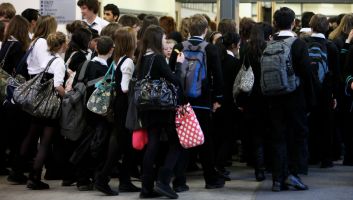
Since the pandemic, high levels of pupil absence have been one of the biggest challenges facing schools in England. Its impact has not been felt evenly, and it has contributed to the widening of the disadvantage gap. Last week, the…
By Emily Hunt and Lily Wielar

A new report by the Education Policy Institute (EPI) , funded by The Nuffield Foundation , shows significant variation in how free school meals (FSM) and free early years meals (FEYM) are accessed across schools and local authorities in England.…
By Dr Kerris Cooper and Dr Tammy Campbell