
Further analysis of confirmed schools affected by RAAC
Yesterday, EPI published initial analysis of the 79 schools that the BBC had identified as having RAAC. Later that day, the Department for Education published a fuller list of 147 schools that have responded to the DfE survey and have since been confirmed as having RAAC. There may still be schools with RAAC that have not yet been identified, perhaps because they have not responded to the survey or RAAC hasn’t been formally identified.
Nevertheless, we have updated our analysis to cover the schools that we know, so far, have RAAC.1 We were interested in whether there were any patterns regionally, based on levels of disadvantage and based on the governance structure of schools.
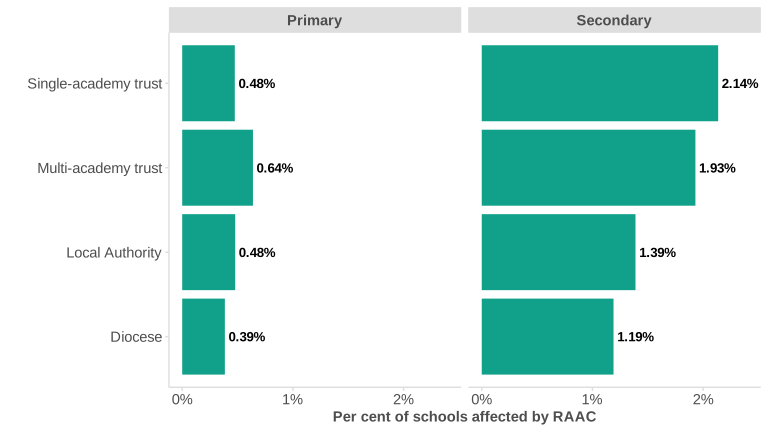
Our first finding, as shown in Figure 1 below, is that secondary schools are far more likely to currently be affected by RAAC than primary schools (we stress “currently” because we do not know whether RAAC has already been addressed in large numbers of primary schools).
We also find that schools in Single or Multi Academy Trusts are more likely than local authority maintained schools to have RAAC. This could simply be because secondary schools are more likely to be academies (80 per cent of secondary schools are academies compared to 40 per cent of primary schools) and so it follows that there is a greater propensity for academy trusts to have RAAC-affected schools. Another note of caution here is that RAAC affected schools could have converted to academy status at any point in the last decade or so (i.e. we cannot conclude from this data that academy trusts are any less likely to “deal” with RAAC than local authorities).
What this finding does tell us, is that 69 percent of schools with RAAC actually fall under the ultimate oversight of the DfE, rather than local authorities.
Figure 1: Governance of RAAC affected schools
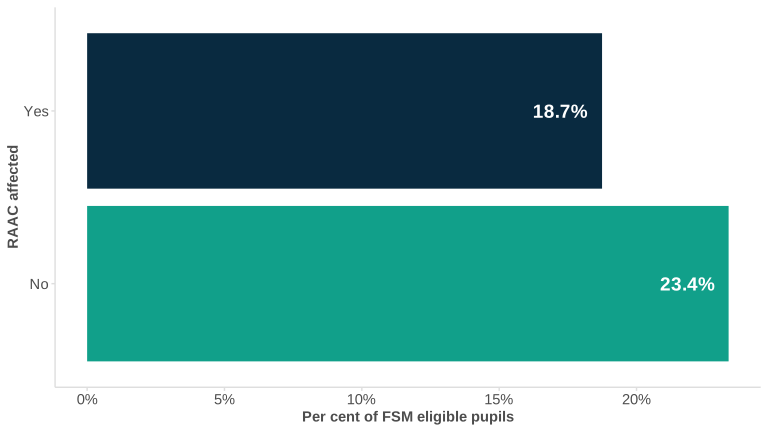
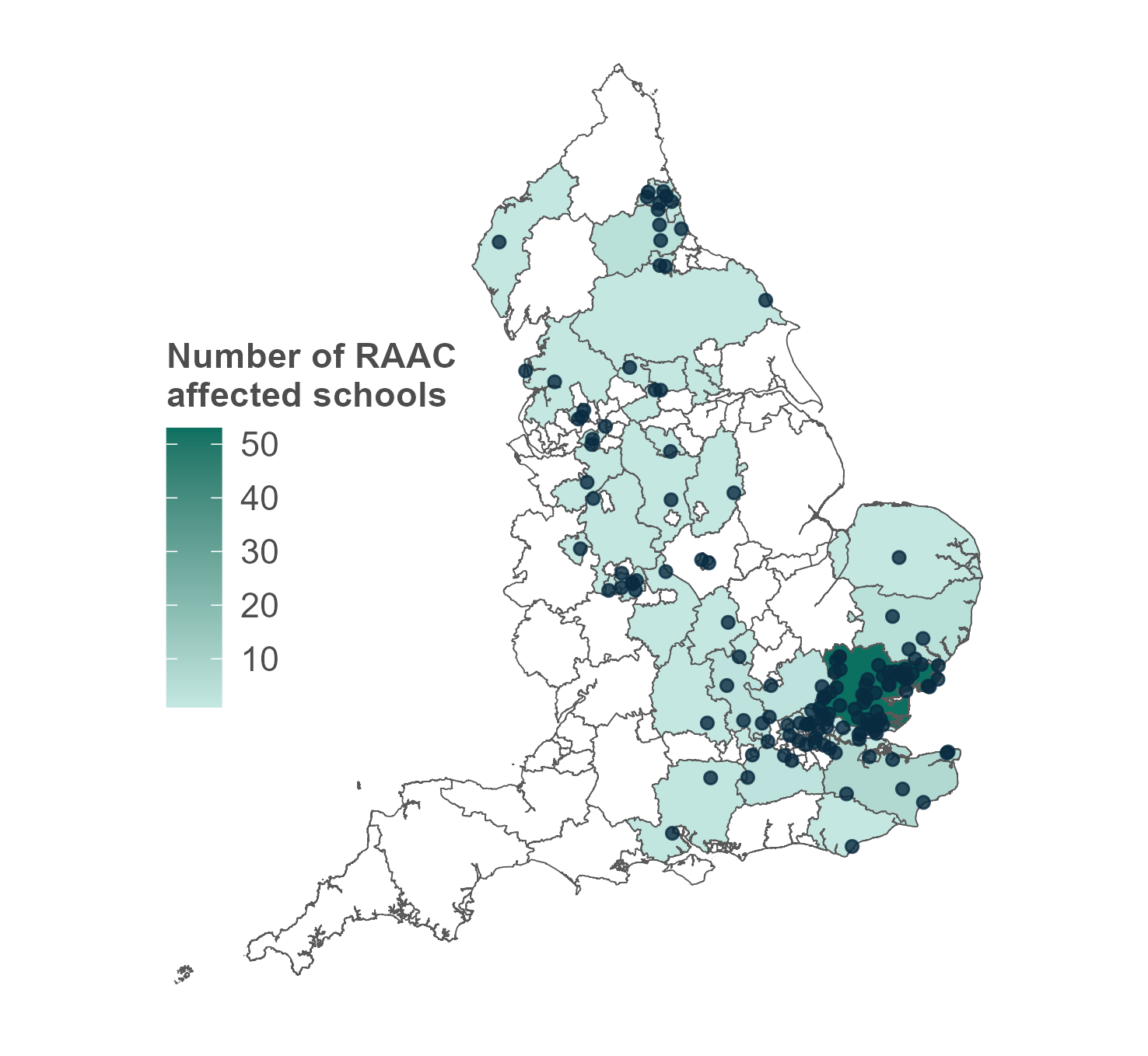 Overall, we haven’t found anything in this headline analysis that identifies common features of RAAC affected schools (other than they are more likely to be secondary schools and in academy trusts). We continue to highlight the need for a review of what decisions were made, based on what evidence, so that we can learn lessons from this latest incident.